
The early months of 2026 have forced a familiar question back onto the table: what happens to the world economy when one of its most critical arteries gets cut?
Following joint U.S and Israeli strikes on Iranian targets and Tehran’s retaliatory missile and drone campaign, the Strait of Hormuz, through which roughly 20% of the world’s daily oil supply flows has shut down for normal tanker traffic. Iranian forces have threatened to attack any vessel attempting passage, and that threat has largely held. Tanker movements through the Gulf have slowed down to near-standstill.
This isn’t just an energy story. It’s a supply chain story and it’s playing out across every industry that touches global trade.
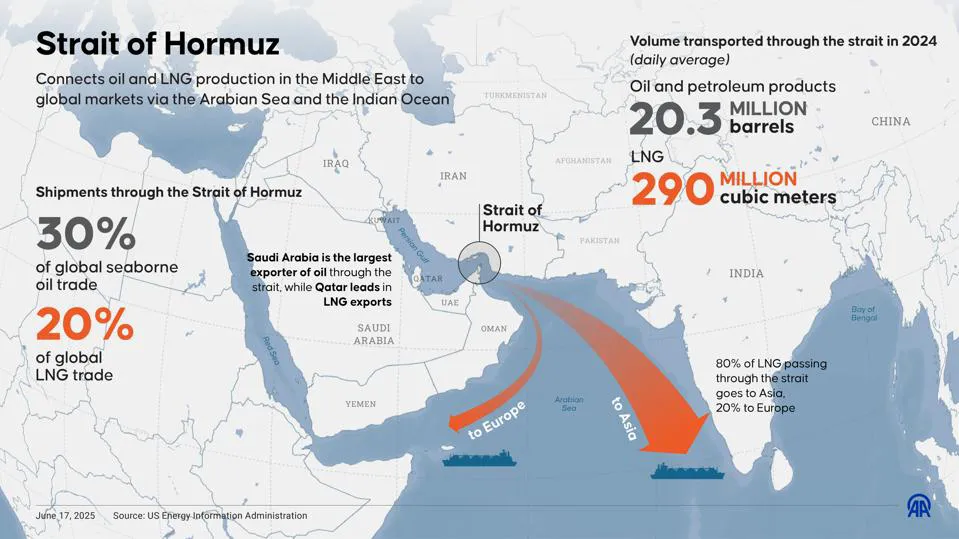
The First Wave:
Brent crude and natural gas prices have increased dramatically as markets started factoring in the prospect of a prolonged disruption. War-risk insurance premiums for tankers and freighters have jumped sharply, raising the cost of moving anything by sea through the region.
Carriers avoiding Gulf waters are rerouting around Africa’s Cape of Good Hope, adding anywhere from seven to fourteen days to transit times depending on origin and destination. That adds costs, delays, and congestion at Asian ports that were already operating near capacity.
The financial impact is real too. Across commodity markets, equities, and credit, investors are repricing risk in real time, with the duration and scope of the conflict still unknown.
Further Down the Supply Chain:
Energy is the obvious pressure point, but the knock-on effects run well below the surface.
Petrochemical feedstocks like naphtha, ammonia, and methanol inputs for plastics, chemicals, and fertilizers are facing price pressure that moves upstream into manufacturing costs across dozens of industries. Fertilizer shipments, a significant share of which transit Hormuz, are especially exposed, with limited alternative routing available at scale.
Automotive and electronics manufacturers are dealing with a dual pressure: higher energy costs eating into margins, and cargo delays throwing just-in-time production schedules off rhythm.
What makes this particularly difficult to manage is the combination of cost shock and price volatility arriving simultaneously. Companies aren’t just absorbing higher costs, they’re trying to plan around costs they can’t predict week to week.
What Supply Chain Leaders Should Take from This:
The Hormuz crisis isn’t an outlier. It’s the latest in a sequence of geopolitical disruptions, after COVID-era bottlenecks, the Red Sea Houthi attacks, and the post-Ukraine energy repricing that have tested how well organizations actually prepared for the risks they knew existed.
A few things this disruption makes clear:
- Diversification has limits without chokepoint awareness. Multi-sourcing strategies only reduce risk if they also reduce dependence on shared vulnerabilities, single shipping corridors, single currency exposures, single energy sources. Many companies diversified suppliers without asking where those suppliers’ inputs come from.
- Scenario planning needs geopolitical input. Standard supplier-failure risk models weren’t built to quantify simultaneous surges in energy costs, insurance rates, and freight prices. Organizations that built integrated macro-risk models are in a better position right now than those that didn’t.
- Procurement and treasury need to be in the same room. Contract flexibility, hedging positions, and working capital buffers aren’t treasury-only concerns anymore. When geopolitics drives cost uncertainty at this speed, procurement decisions and financial risk management must move together.
- Tier visibility is no longer nice-to-have. You can’t respond to disruptions you can’t see. Deep supply chain mapping, knowing where your second and third tier suppliers sit geographically and which routes their goods travel, is now baseline infrastructure, not a premium capability.
The Bigger Picture
The Strait of Hormuz has been a theoretical worst-case scenario in supply chain risk models for years. In 2026, it became a real one.
What the crisis illustrates is that the most damaging supply chain shocks today aren’t purely physical. They’re pricing events, liquidity events, and risk-repricing events, ones that may not stop production tomorrow but will quietly reshape cost structures, erode margins, and shift competitive positions over the months that follow.
The companies that come through this in reasonable shape will be those that treated resilience as a strategic capability, not a contingency plan they’d revisit after the next disruption hit. That time is now.